
Does Fast Charging Damage Your Phone Battery? Facts You Should Know
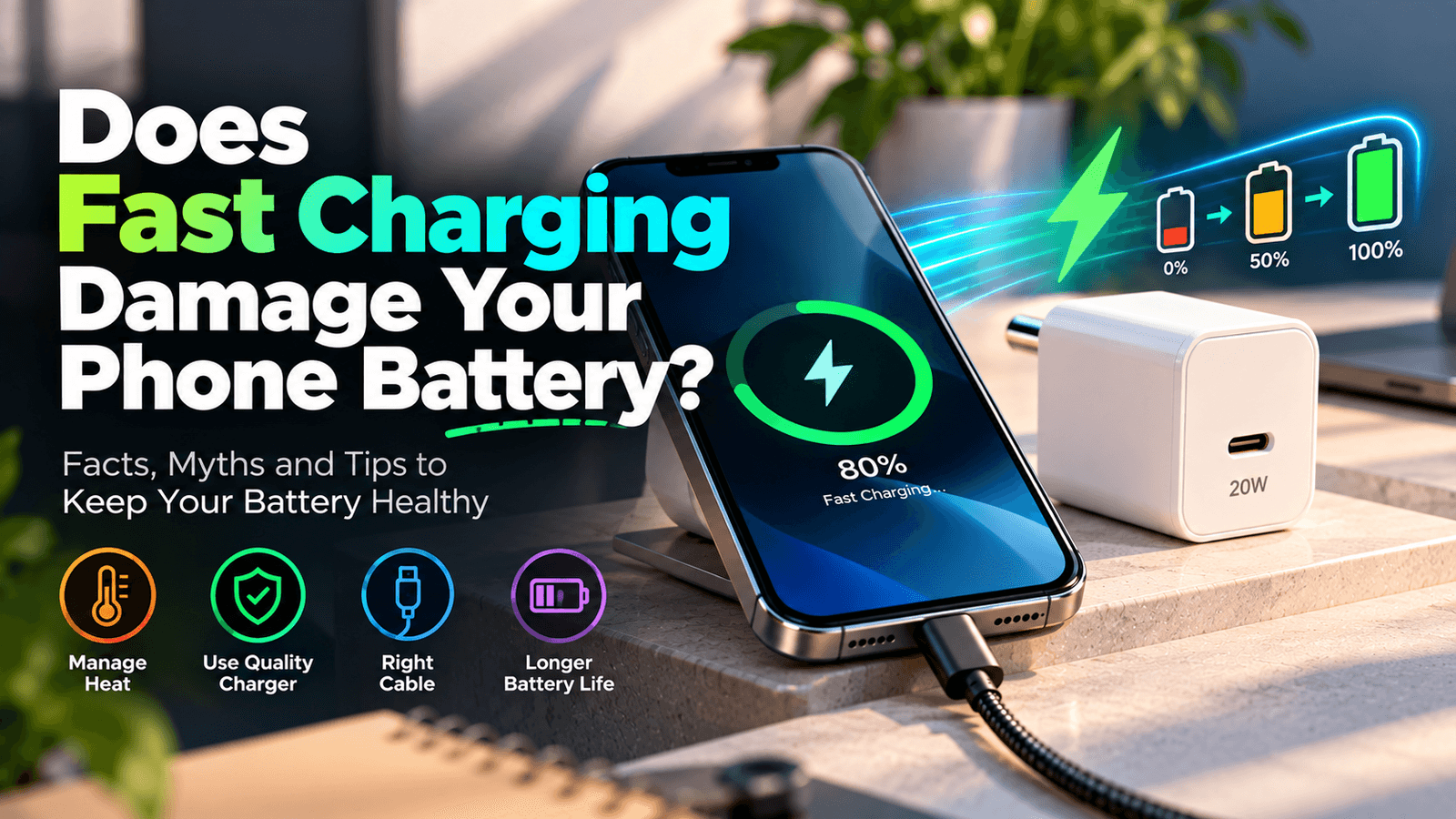
Fast charging has become an important feature in modern smartphones. Whether you're using your phone for work, entertainment, gaming, or staying connected with friends and family, having a battery that charges quickly can make everyday life more convenient. However, one question many smartphone users ask is, "Does fast charging damage your phone battery?" Some people believe that fast charging reduces battery life, while others use it every day without worrying about battery health. The truth is more nuanced. Fast charging itself isn't automatically harmful, but factors such as heat, charging conditions, battery design, and charging technology can influence how your battery ages. In this blog, we'll explain how fast charging works, its impact on battery health, and how to charge your smartphone more responsibly.
- What Is Fast Charging?
Fast charging is a technology that allows a compatible smartphone to receive electrical power at a higher rate than basic charging methods. A phone's charging speed depends on its supported power levels, charging protocol, battery condition, temperature, and the charger and cable being used. Modern charging technologies, including USB Power Delivery (USB PD), allow compatible chargers and devices to negotiate suitable power levels. For example, a 20W charger can provide power to a compatible smartphone at an appropriate charging rate. However, the phone controls how much power it accepts, and a 20W charger doesn't necessarily deliver 20W continuously throughout the entire charging process.
- Does Fast Charging Reduce Battery Life?
Fast charging does not automatically mean your phone's battery will be damaged. Modern smartphones are designed with battery management systems that regulate charging based on factors such as temperature, battery level, and device specifications. However, battery aging is a natural process, and charging conditions can influence how quickly a battery loses capacity over time. Heat is particularly important because repeated exposure to high temperatures can accelerate battery degradation. Fast charging may generate additional heat depending on the device, charging system, and environmental conditions. This means that the impact of fast charging varies between devices and usage patterns rather than being the same for every smartphone.
- How Does Heat Affect Your Phone Battery?
Temperature is one of the most important factors when discussing battery health. Lithium-ion batteries, which are widely used in smartphones, perform best within suitable temperature ranges specified by the manufacturer. When a phone becomes excessively hot during charging, its charging system may reduce power to help protect the battery. Repeated exposure to elevated temperatures can contribute to faster battery aging. Activities such as gaming while charging, charging in direct sunlight, or using a phone in a hot environment can increase the likelihood of overheating. To support better battery care, charge your phone in a cool and ventilated place and avoid unnecessary heat during charging.
- Why Does Charging Slow Down After 80%?
Have you noticed that your phone charges quickly when the battery is low but takes longer to reach 100%? This is generally normal. Smartphone charging systems often use different charging stages to manage battery charging and help reduce stress as the battery approaches a high state of charge. During the early stage, the phone may accept relatively higher charging power when conditions allow. As the battery level increases, charging power is commonly reduced, and the final stage may take longer. This behavior is part of battery management and doesn't necessarily indicate a faulty charger or cable. The exact charging pattern depends on the smartphone manufacturer, battery design, and charging technology.
- Is a 20W Fast Charger Safe for Your Phone?
A 20W fast charger can be suitable for a smartphone that supports its charging standards and power requirements. However, charger wattage alone doesn't determine safety. The quality of the charger, compatibility with the phone, cable condition, and charging environment are also important. Razix Ampio 20 is a 20W PD Type-C fast charger designed for compatible devices. Before using it, customers should check their phone's charging specifications and ensure that the charger supports the required charging protocol. A charger should be selected based on device compatibility and reliable product specifications rather than simply choosing the highest available wattage.
- Can a High-Wattage Charger Damage Your Phone?
Many people worry that using a 65W or 100W charger with a smartphone will force excessive power into the battery. In a compatible charging setup, the phone and charger negotiate power according to supported capabilities, and the phone controls its power intake. A higher-wattage charger does not automatically mean that the phone will charge at its maximum rated output. However, compatibility, product quality, and charging standards still matter. Using a damaged, counterfeit, or unsuitable charger can create safety risks. Always choose a reliable charger from a reputable manufacturer and follow the device manufacturer's charging recommendations.
- Does Fast Charging Affect Battery Health More Than Normal Charging?
Battery aging depends on multiple factors, including temperature, charging patterns, battery chemistry, usage, and time. Fast charging can contribute to additional heat in some situations, which may influence long-term battery degradation. However, it is not accurate to claim that every fast charger will significantly reduce battery life compared with every standard charger. Different smartphones and charging systems manage power and temperature differently. Some devices offer battery protection features, such as optimized charging or charging limits, to help reduce the time spent at high charge levels. Check your phone's settings to see which battery management features are available.
7 Tips to Protect Your Phone Battery While Fast Charging
1. Use a Compatible Charger
Always select a charger that matches your smartphone's supported charging specifications. A reliable and compatible charger helps ensure that the device can use the intended charging technology.
2. Choose a Good-Quality Charging Cable
Your cable is an important part of the charging system. Use a cable with an appropriate power rating and connector that matches your device and charger. Avoid damaged cables or connectors that show signs of wear.
3. Avoid Excessive Heat
Keep your smartphone in a cool, ventilated location while charging. Avoid charging under pillows, blankets, or in direct sunlight, and reduce demanding activities if the phone becomes hot.
4. Don't Use Your Phone for Heavy Gaming While Charging
Gaming and other demanding activities can generate additional heat and consume power while your phone is charging. If you want to reduce unnecessary heat, allow your phone to charge without intensive use.
5. Use Battery Protection Features
Some smartphones offer charging limits or optimized charging settings. If your device provides these features, review the manufacturer's guidance and consider enabling options that suit your usage.
6. Avoid Damaged Chargers and Cables
If your charger or cable has visible damage, exposed wires, or unusual heating, stop using it and replace it with suitable equipment. Product quality is important for safe everyday charging.
7. Follow Your Phone Manufacturer's Recommendations
Different smartphone models have different battery designs and charging requirements. Refer to the manufacturer's instructions for recommended charging practices, temperature limits, and battery care features.
- Does Charging Your Phone Overnight Damage the Battery?
Charging your phone overnight does not automatically mean the battery will be damaged. Modern smartphones use charging management systems that can reduce or stop charging at certain levels, depending on their design. However, keeping a phone at a high state of charge for extended periods, particularly in warm conditions, can contribute to battery aging over time. Some smartphones offer optimized charging or charging limits to help manage this. If you regularly charge your phone overnight, check whether your device has a battery protection feature and follow the manufacturer's recommendations.
- Razix Ampio 20: A Practical 20W PD Charging Option
Razix Ampio 20 is a 20W PD Type-C fast charger designed for compatible smartphones and other suitable devices. USB Power Delivery allows compatible devices and chargers to negotiate charging power based on their supported capabilities. With the right charging setup, a 20W PD charger can be a convenient option for everyday smartphone charging. Before purchasing, check your device's compatibility and charging requirements. Pairing the charger with a suitable cable and using it in a well-ventilated environment can help support a consistent charging experience.
- Does the Charging Cable Affect Battery Health?
A charging cable can affect charging performance when it is damaged, unsuitable, or unable to support the required power. However, battery health is influenced by several factors beyond the cable alone. A cable with an appropriate power rating and reliable construction can help ensure that your charger and smartphone work as intended. Razix LINK45 is a Type-C to Type-C braided cable designed to support up to 45W under compatible conditions. The actual charging power depends on the charger, phone, and supported charging standards. Choosing the right cable is an important part of maintaining a suitable charging setup.
Frequently Asked Questions
1. Does fast charging damage an iPhone battery?
Fast charging does not automatically damage an iPhone battery. Battery aging depends on several factors, including temperature, charging patterns, and the phone's battery management system. Use compatible charging accessories and follow Apple's battery care recommendations.
2. Is 20W fast charging safe for Android phones?
A 20W charger can be suitable for a compatible Android phone. Check the device's supported charging standards and use a reliable charger and cable.
3. Should I stop using fast charging every day?
You don't necessarily need to stop using fast charging. Pay attention to excessive heat, use compatible charging accessories, and take advantage of available battery protection features.
4. Is slow charging better for battery health?
Charging speed is only one factor in battery aging. Temperature, time spent at high charge levels, and other usage conditions also matter. Slow charging isn't automatically better in every situation.
5. Does a 100W charger charge every phone at 100W?
No. The phone determines how much power it can accept based on its supported capabilities. A 100W charger does not automatically deliver 100W to every connected smartphone.
6. How can I prevent my phone from overheating while charging?
Charge your phone in a cool, ventilated place, avoid demanding activities while charging, and keep it away from direct sunlight or enclosed spaces. If your phone becomes excessively hot, disconnect it and seek professional advice if necessary.
Final Thoughts
Fast charging is a useful technology that makes it easier to keep your smartphone powered throughout the day. It does not automatically damage your battery, but charging conditions, heat, and battery management can influence long-term battery health. Choosing a compatible charger, using a suitable cable, and avoiding excessive heat are practical ways to support your phone's charging experience. Whether you use a 20W PD charger like Razix Ampio 20 or another compatible charging solution, focus on reliable quality and your smartphone's requirements. With the right charging habits, you can enjoy the convenience of fast charging while taking sensible care of your battery.
Charge smarter. Live better. Choose Razix.